ESSAYS · TEXTS · CONTEXTS
Articles
Short but scholarly introductions to major thinkers, arguments and traditions in intellectual history and philosophy.
New to the field? Start with Samuel Woodall’s Intellectual History: A Guide to Ideas in Context for historical approaches, examples and further reading.
-
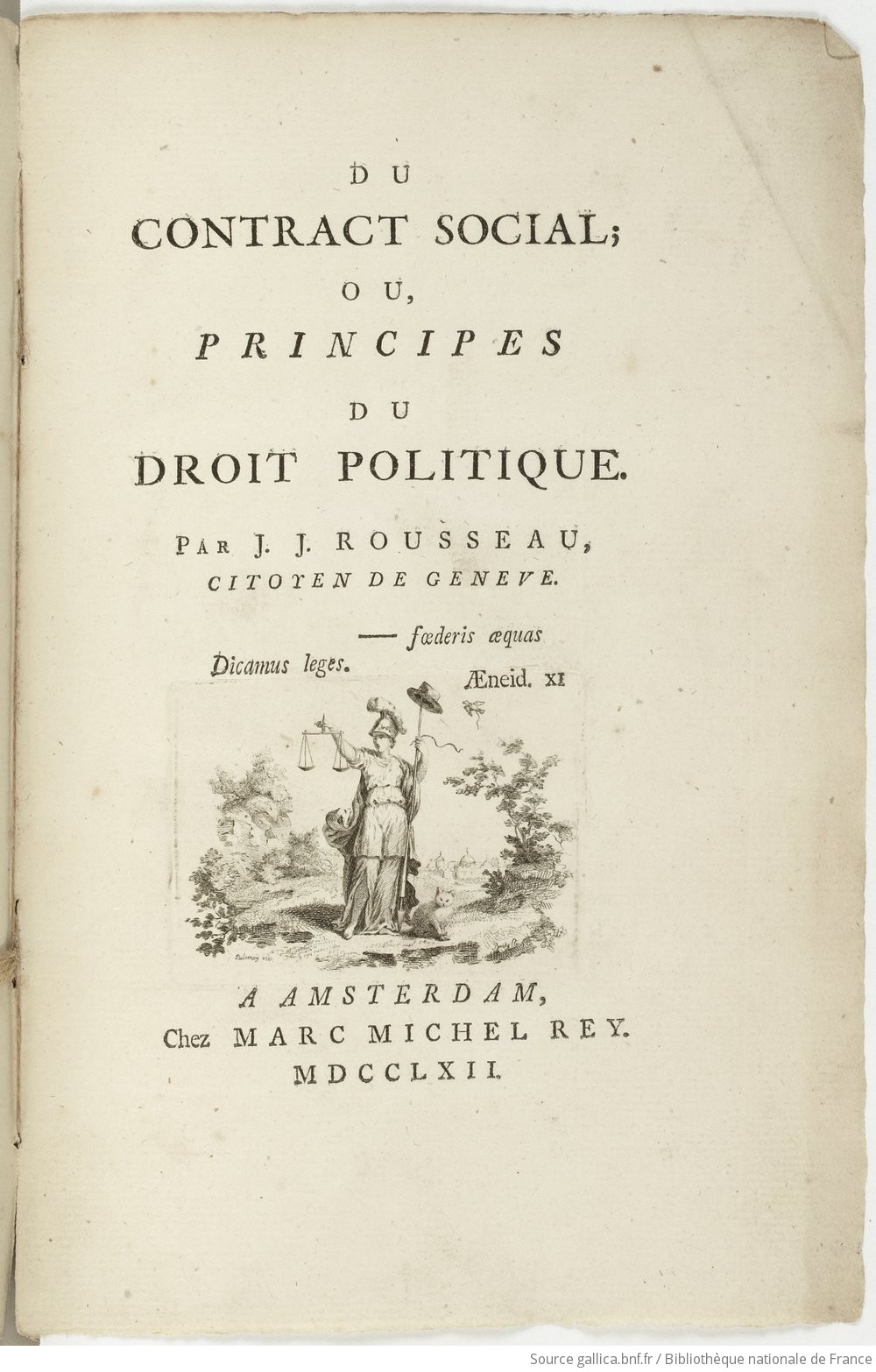
Can We Be Free Under Laws? Rousseau, Inequality and the General Will
Bring the origins of unequal dependence into conversation with the demand for legitimate government. Our reading route moves from property in the Discourse on Inequality to association, civic freedom and the general will in The Social Contract. Distinguish a common interest from the wishes of a ruler or a collection of private advantages.
-
Can We Tell the Truth About Ourselves? Rousseau and the Confessions
Begin with the opening of Rousseau’s Confessions, then the stolen ribbon episode in Book II. Notice how recollection, motive and an appeal for understanding can pull in different directions. The central question is how we judge a story told by the person whose conduct is at issue.
-
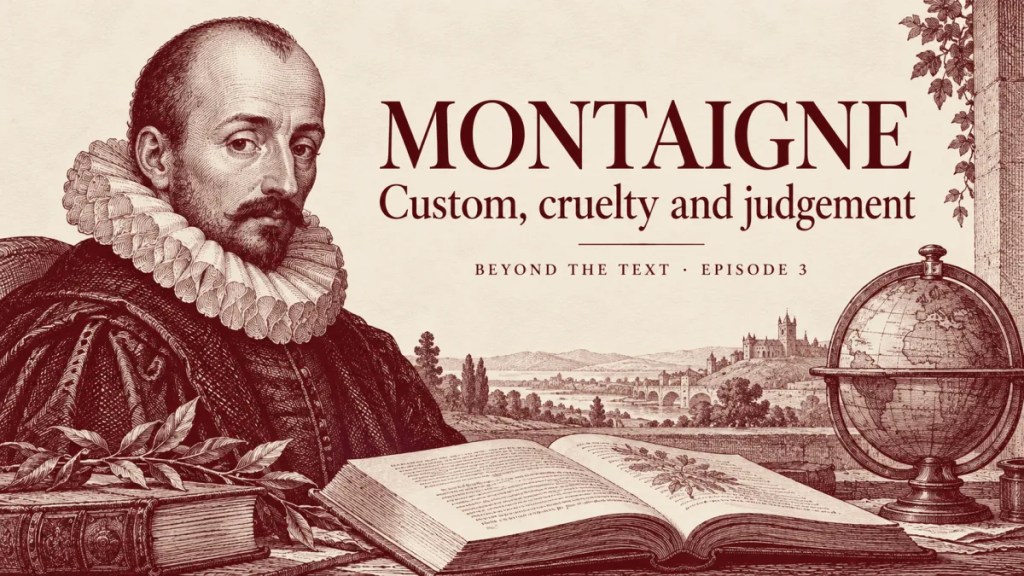
Who Gets to Call Whom Barbarous?
Montaigne on custom, cruelty and cultural judgement: Samuel Woodall and Jack Thomson ask who gets to call another society barbarous.
-
How Should We Learn to Live and Die?
Explore Montaigne on death, education and everyday experience with Samuel Woodall and Jack Thomson in the second Beyond the Text conversation.
-
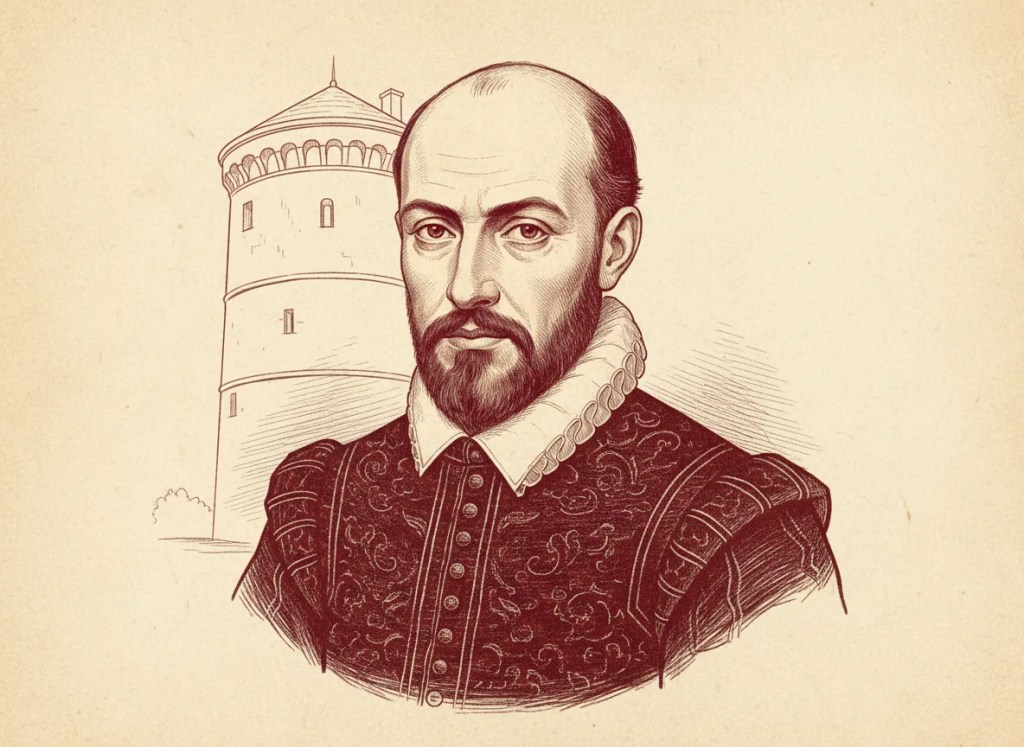
Why Did Montaigne Make Himself His Subject?
Why did Montaigne write about himself? Explore his Essays, changing identity and self-knowledge with Samuel Woodall and Jack Thomson.
-
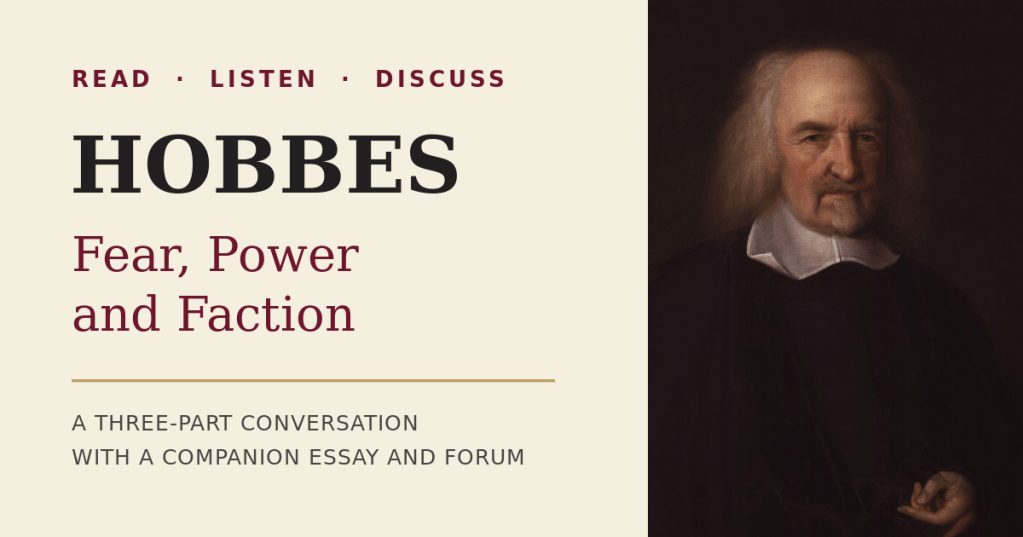
When Does Disagreement Become Faction?
Episode three of Hobbes: Fear, Power and Faction. Hobbes on sedition, organised disagreement and the later problem of constitutional party.
-
Why Should We Obey the State?
Episode two of Hobbes: Fear, Power and Faction. A conversation about security, political obligation, liberty and the limits of obedience.
-
Who Was Thomas Hobbes, and What Was He Afraid Of?
Episode one of Hobbes: Fear, Power and Faction. Samuel Woodall and Jack Thomson ask how Hobbes’s life and political world shaped his philosophy.
-

‘Having to be thus’: Wilhelm Dilthey’s response to Kant’s ethics and aesthetics of disinterest
Written by Jack Thomson (7 min read) Introduction Immanuel Kant distinguishes three faculties of knowledge, each made the subject of considerable analysis in three separate Critiques published between 1781 and 1790. The first, the Critique of Pure Reason, describes the objects of scientific cognition; the second, the Critique of Practical Reason, considers these same objects…
-

The Ideas of Thomas Paine: Revolution and Rights
Introduction: Thomas Paine emerged from a background marked by relative lack of success, having encountered failure in numerous pursuits during his early life. He exhibited strong support for the American Revolution, notably more so than Edmund Burke, as demonstrated by his seminal work Common Sense (published in 1776), which was disseminated among American troops engaged…
FURTHER READING
From The Intellectual Historian
Continue with Samuel Woodall’s research-led essays on political thought, reform, rights and the Enlightenment.

